Water Recycling Plants are facilities designed to treat and reuse wastewater for various purposes. These systems collect water from domestic, industrial, or agricultural sources, process it through different treatment stages, and make it suitable for reuse. The concept has developed over time as populations grew and freshwater resources became more limited.
Historically, water treatment focused mainly on making water safe for disposal. However, increasing water demand has shifted attention toward reuse and conservation. Water Recycling Plants now play a key role in managing water resources by turning wastewater into a usable asset rather than a waste product.
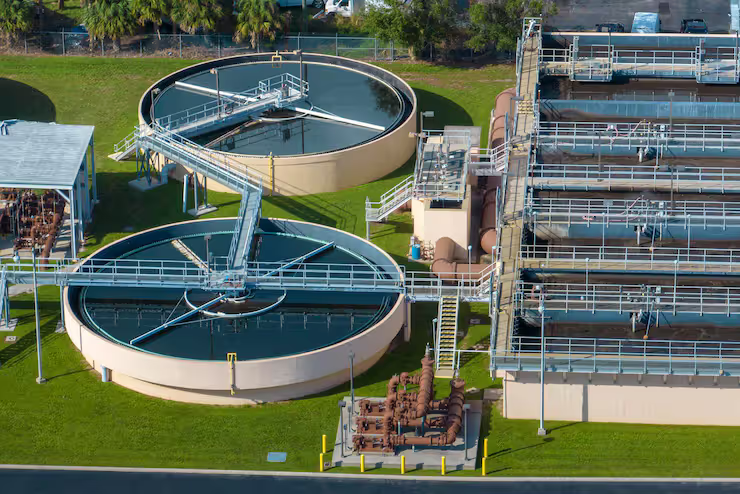
These plants use a combination of physical, chemical, and biological processes. Common stages include filtration, sedimentation, biological treatment, and disinfection. The goal is to remove contaminants such as solids, bacteria, and chemicals, ensuring the treated water meets specific quality standards for its intended use.
Importance
Water Recycling Plants are important because they help address water scarcity, which affects many regions worldwide. As urban areas expand and industrial activities increase, the demand for water continues to rise. Recycling water reduces pressure on natural sources like rivers, lakes, and groundwater.
For everyday people, these systems contribute to a more reliable water supply. Treated water can be used for irrigation, industrial processes, and even certain domestic purposes. This reduces dependency on freshwater resources and helps maintain environmental balance.
Key challenges addressed by Water Recycling Plants include:
- Water shortages: recycling reduces reliance on limited freshwater sources
- Pollution control: treatment prevents harmful substances from entering natural ecosystems
- Sustainable urban development: supports growing cities with consistent water availability
- Agricultural needs: provides alternative water sources for farming
In addition, these plants support environmental protection by reducing wastewater discharge into natural bodies. This helps maintain aquatic ecosystems and improves overall water quality.
Recent Updates
Recent trends in Water Recycling Plants show a shift toward advanced and efficient technologies. Modern systems are increasingly automated, using sensors and data analytics to monitor water quality and optimize operations.
One major development is the adoption of membrane technologies. Processes like membrane filtration and reverse osmosis allow for higher levels of purification. These methods can remove very small particles, including bacteria and dissolved substances.
Another trend is energy efficiency. New systems are designed to consume less energy while maintaining effective treatment. Some facilities even recover energy from wastewater through processes like biogas generation.
Digital monitoring is also becoming more common. Smart systems track parameters such as pH levels, temperature, and contaminant concentrations in real time. This improves reliability and reduces the chances of treatment failures.
There is also growing interest in decentralized systems. Smaller, local Water Recycling Plants are being developed to serve specific communities or industries. This reduces the need for large-scale infrastructure and allows for more flexible water management.
Laws or Policies
Water Recycling Plants operate under various regulations to ensure safety and environmental protection. In countries like India, water management is governed by multiple laws and guidelines.
Key regulatory frameworks include:
- Water (Prevention and Control of Pollution) Act: regulates discharge of pollutants into water bodies
- Environment Protection Act: provides standards for environmental safety, including wastewater treatment
- Central Pollution Control Board (CPCB) guidelines: set limits for water quality and treatment processes
State-level pollution control boards also play a role in monitoring compliance. Industries and municipalities must follow specific standards before releasing or reusing treated water.
Government programs often encourage water recycling as part of sustainable development. Urban planning policies may include requirements for wastewater treatment and reuse in residential or commercial projects.
These regulations ensure that Water Recycling Plants operate safely and effectively, protecting both public health and the environment.
Tools and Resources
Several tools and resources support the operation and planning of Water Recycling Plants. These tools help engineers, planners, and operators manage systems more efficiently.
Common tools include:
- Water quality testing kits: measure parameters like pH, turbidity, and dissolved oxygen
- Monitoring software: tracks system performance and detects issues early
- Design calculators: estimate capacity, flow rates, and treatment requirements
- Simulation models: predict system behavior under different conditions
Below is a simple table showing common treatment stages and their functions:
| Treatment Stage | Purpose | Common Methods |
|---|---|---|
| Preliminary Treatment | Remove large debris | Screening, grit removal |
| Primary Treatment | Settle suspended solids | Sedimentation tanks |
| Secondary Treatment | Break down organic matter | Biological processes |
| Tertiary Treatment | Remove remaining contaminants | Filtration, chemical treatment |
| Disinfection | Eliminate harmful microorganisms | Chlorination, UV treatment |
Online platforms and technical guidelines from environmental agencies also provide useful information for planning and maintaining these systems.
FAQs
What are Water Recycling Plants used for?
Water Recycling Plants are used to treat wastewater so it can be reused for purposes such as irrigation, industrial processes, and certain domestic applications. They help conserve freshwater resources.
How do Water Recycling Plants improve water sustainability?
Water Recycling Plants reduce the need for extracting fresh water by reusing treated wastewater. This helps maintain natural water sources and supports long-term sustainability.
Are Water Recycling Plants safe for public use?
Yes, when operated according to regulations, Water Recycling Plants produce water that meets safety standards for its intended use. Different treatment levels ensure appropriate quality.
What technologies are used in modern Water Recycling Plants?
Modern Water Recycling Plants use technologies like membrane filtration, biological treatment, and digital monitoring systems to improve efficiency and water quality.
Can recycled water be used for drinking?
In some cases, advanced treatment processes can make water suitable for drinking. However, this depends on strict quality standards and regulatory approval.
Conclusion
Water Recycling Plants play a vital role in sustainable water management by transforming wastewater into a usable resource. They help reduce pressure on natural water sources, support urban and agricultural needs, and protect the environment. Advances in technology have made these systems more efficient and reliable. With proper regulations and responsible use, water recycling continues to contribute to long-term water security.