AI is transforming how food quality is monitored and maintained. This article explains how modern systems improve safety, consistency, and efficiency in food processing environments.
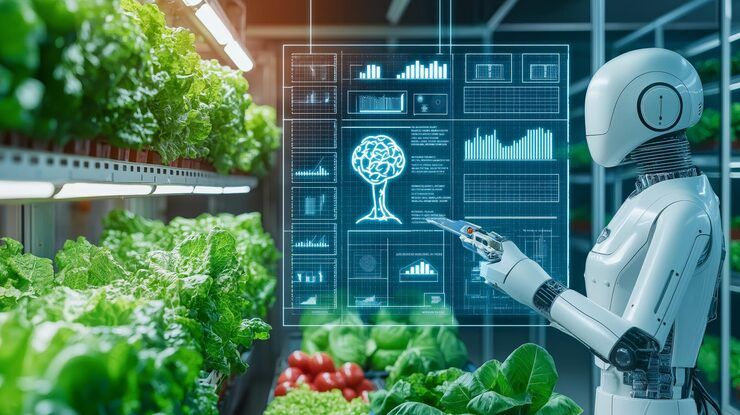
Food safety and quality have always been critical concerns in the food industry. Traditional methods of inspection often rely on manual checks, visual observation, and sample testing. While these methods can be effective, they may not always detect hidden defects or ensure consistent monitoring across large-scale production.
With the rise of advanced technologies, ai in food quality control is becoming an important part of modern processing systems. It uses data-driven models and automation to analyze food products in real time. These systems can identify patterns, detect anomalies, and improve overall inspection accuracy.
The concept of ai in food industry applications began with simple automation tools but has now evolved into intelligent systems that can learn and adapt. Today, ai in food manufacturing environments helps track quality at every stage—from raw material inspection to packaging.
Artificial intelligence supports various aspects such as image recognition, sensor-based analysis, and predictive insights. These tools make it easier to maintain consistent standards while reducing human error. As food supply chains grow more complex, such systems help ensure reliability and transparency.
Importance
The importance of ai in food quality control lies in its ability to improve safety, efficiency, and consistency. Food products must meet strict standards, and even minor errors can lead to health risks or wastage. AI-driven systems help address these challenges effectively.
One of the key benefits is real-time monitoring. Instead of relying only on periodic inspections, AI systems continuously observe production processes. This helps detect issues such as contamination, incorrect packaging, or quality variations at an early stage.
Another important factor is consistency. In large-scale production, maintaining uniform quality can be difficult. AI systems analyze large volumes of data and ensure that each product meets defined standards. This reduces variations and improves consumer trust.
AI also helps in reducing waste. By identifying defects early, manufacturers can prevent large batches from being rejected. This leads to better resource management and more efficient production processes.
For workers, AI tools simplify complex tasks. Instead of manual inspection, employees can focus on monitoring systems and making informed decisions. This creates a more structured and efficient workflow.
Overall, ai in food quality control plays a key role in addressing modern challenges such as increasing demand, strict regulations, and the need for transparency in food production.
Recent Updates
In the past year, there have been several notable developments in ai in food industry technologies. These updates focus on improving accuracy, scalability, and integration with existing systems.
One major trend is the use of advanced image recognition systems. These systems can analyze food items at high speed and detect defects such as discoloration, shape irregularities, or contamination. In 2025, many production units adopted high-resolution vision systems combined with AI models for better inspection.
Another update is the integration of sensor-based monitoring. Sensors collect data related to temperature, humidity, and chemical composition. AI models analyze this data to ensure that food products are processed under optimal conditions. This approach is widely used in ai in food manufacturing environments.
Predictive analytics has also gained importance. AI systems can now predict potential quality issues based on historical data. For example, if certain conditions lead to spoilage, the system can alert operators in advance.
Automation has also improved. Modern systems combine robotics with AI to handle repetitive tasks such as sorting and packaging. This ensures faster processing while maintaining quality standards.
In addition, cloud-based monitoring solutions are becoming more common. These systems allow remote tracking of production processes and provide real-time insights. This makes it easier to manage multiple facilities and maintain consistent quality.
These updates show how ai in food quality control continues to evolve and adapt to industry needs.
Laws or Policies
Food quality control is governed by strict regulations to ensure safety and compliance. With the introduction of AI systems, regulatory frameworks are also evolving to address new challenges.
In many countries, food safety authorities require proper documentation and traceability. AI systems support this by maintaining detailed records of production processes. This helps in audits and ensures compliance with safety standards.
Data protection is another important aspect. AI systems collect and analyze large amounts of data, including production and operational details. Regulations require that this data is handled securely and used responsibly.
There are also guidelines related to automation and decision-making. While AI systems can assist in quality control, human oversight is still necessary. This ensures that critical decisions are reviewed and validated.
In regions like India, food safety regulations emphasize hygiene, quality standards, and labeling requirements. AI tools help organizations meet these requirements by providing accurate and consistent monitoring.
Globally, there is a growing focus on transparency. Consumers want to know how their food is processed. AI systems support this by providing traceable data and improving visibility across the supply chain.
As AI continues to grow, policies will likely focus on balancing innovation with safety and accountability.
Tools and Resources
To implement ai in food quality control effectively, various tools and resources are used. These tools support data collection, analysis, and monitoring across different stages of production.
Image analysis tools are widely used to inspect food items visually. These systems use cameras and AI models to detect defects and ensure quality standards. They are especially useful in sorting and grading processes.
Sensor-based systems play a key role in monitoring environmental conditions. These sensors track factors such as temperature, moisture, and chemical composition. AI models analyze this data to maintain optimal conditions.
Data analytics platforms help process large volumes of information. These platforms provide insights into production trends, quality issues, and performance metrics. They support better decision-making and continuous improvement.
Automation tools are also important. These include robotic systems that handle tasks such as sorting, packaging, and labeling. AI enhances these systems by enabling adaptive and intelligent operations.
Learning resources such as online courses, training modules, and technical documentation help professionals understand how to use AI in food processing. These resources support skill development and knowledge sharing.
Templates and frameworks are available for quality management and process monitoring. These help organizations design structured systems and ensure consistency.
By combining these tools, organizations can build effective ai in food quality control systems that improve efficiency and reliability.
FAQs
What is AI in food quality control?
AI in food quality control refers to the use of intelligent systems to monitor, analyze, and maintain food quality during production. It uses data and automation to improve accuracy and efficiency.
How does AI improve food safety?
AI improves food safety by detecting issues early, monitoring conditions in real time, and ensuring consistent quality. It reduces the chances of contamination and errors.
Can AI replace human inspection in food processing?
AI supports human inspection but does not fully replace it. Human oversight is still important for decision-making and ensuring compliance with safety standards.
What are the common applications of AI in food manufacturing?
Common applications include visual inspection, sensor-based monitoring, predictive analysis, and automated sorting and packaging.
Is AI suitable for small-scale food production?
AI can be adapted for different scales of production. Smaller units can use basic tools and gradually expand as needed.
Conclusion
AI is changing the way food quality is managed in modern industries. From real-time monitoring to predictive analysis, these systems offer practical solutions to long-standing challenges. The use of ai in food quality control helps improve safety, consistency, and efficiency across production processes.
As technology continues to evolve, AI systems will become more accessible and adaptable. They will support better decision-making and help maintain high standards in food processing. At the same time, regulatory frameworks will ensure that these systems are used responsibly.
For organizations, understanding and adopting AI tools can lead to more reliable operations and improved outcomes. By combining technology with human expertise, the food industry can move toward safer and more efficient processes.